Article
Podcast Episode
June 2, 2026

How to Recover Between Games Without Sitting Too Long

Key Takeaways:

  • Sitting for long periods between matches can increase stiffness and make it harder to perform in your next match.
  • Active recovery helps maintain blood flow and reduce feelings of fatigue throughout tournament play.
  • Use breaks to walk, hydrate, and perform light mobility exercises instead of remaining inactive.
  • The goal between matches isn’t full recovery—it’s maintaining readiness so you’re prepared to compete again.

Contents
For further analysis, we broke down the data by wearable device:
Contents
For further analysis, we broke down the data by wearable device:
Cite this page:

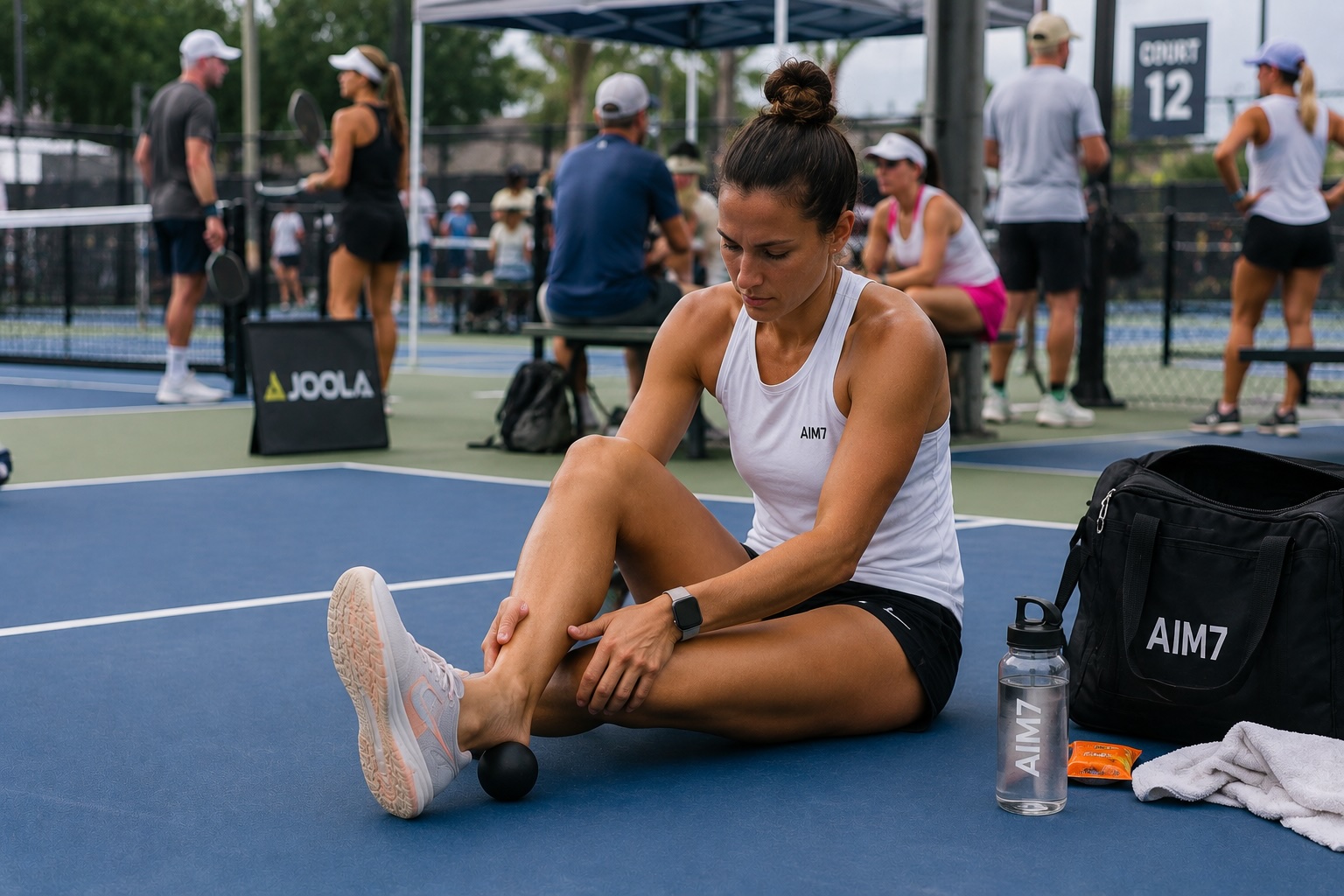
After a tough match, sitting down can feel like the right thing to do. The problem is that long periods of inactivity between matches often leave players feeling stiff, slow, and less prepared for the next time they step on the court.

During tournament play, the goal isn't complete recovery. The goal is to maintain readiness. While your heart rate and breathing should come down after a match, your muscles, joints, and nervous system still benefit from light movement. Research on active recovery suggests that low-intensity activity can help maintain blood flow and reduce feelings of fatigue compared to complete rest, particularly when multiple bouts of exercise are performed throughout the day (1,2).

Many pickleball players notice the same pattern: they finish a match, sit for 30-60 minutes, then feel like they need another warm-up before the next one. A small amount of movement during recovery breaks can help reduce stiffness and make the transition back to competition feel smoother.

A Simple Between-Match Recovery Plan

First 5 Minutes After a Match

Focus on bringing your heart rate down.

  • Walk around the facility or courts
  • Practice relaxed breathing
  • Begin rehydrating

During Longer Breaks

Stay lightly active.

Examples:

  • Easy walking
  • Gentle mobility exercises
  • Light dynamic stretching
  • Short movement breaks every 10-15 minutes

5-10 Minutes Before Your Next Match

Gradually prepare your body to compete again.

Examples:

  • Lateral shuffles
  • Forward and backward movement
  • Arm circles
  • Controlled split-step drills
  • A few short accelerations

Avoid These Common Mistakes

  • Sitting continuously for 30-60+ minutes
  • Static stretching for extended periods
  • Performing an intense workout between matches
  • Waiting until match time to start moving again

Tournament Recovery Essentials

Keep these items courtside:

  • Water bottle
  • Electrolyte packets
  • Light snack or carbohydrate source
  • Hat or cooling towel for hot conditions
  • Resistance band for mobility work
  • Portable seat for short rest periods

Bottom Line

Between-match recovery is about staying ready, not shutting down. Use breaks to hydrate, refuel, and keep your body moving with low-intensity activity. A few minutes of sitting, mixed with walking and mobility work, can help you feel looser, move better, and reduce the need for a full re-warm-up before your next match.

References

  1. Dupuy O, Douzi W, Theurot D, Bosquet L, Dugué B. An evidence-based approach for choosing post-exercise recovery techniques to reduce markers of muscle damage, soreness, fatigue, and inflammation: A systematic review with meta-analysis. Front Physiol. 2018;9:403.
  2. Barnett A. Using recovery modalities between training sessions in elite athletes: Does it help? Sports Med. 2006;36(9):781-796.

Contents
For further analysis, we broke down the data:
Cite this page:

Contents
For further analysis, we broke down the data by wearable device:
Key TAKEAWAYS
  • Sitting for long periods between matches can increase stiffness and make it harder to perform in your next match.
  • Active recovery helps maintain blood flow and reduce feelings of fatigue throughout tournament play.
  • Use breaks to walk, hydrate, and perform light mobility exercises instead of remaining inactive.
  • The goal between matches isn’t full recovery—it’s maintaining readiness so you’re prepared to compete again.

Contents
For further analysis, we broke down the data by wearable device:

After a tough match, sitting down can feel like the right thing to do. The problem is that long periods of inactivity between matches often leave players feeling stiff, slow, and less prepared for the next time they step on the court.

During tournament play, the goal isn't complete recovery. The goal is to maintain readiness. While your heart rate and breathing should come down after a match, your muscles, joints, and nervous system still benefit from light movement. Research on active recovery suggests that low-intensity activity can help maintain blood flow and reduce feelings of fatigue compared to complete rest, particularly when multiple bouts of exercise are performed throughout the day (1,2).

Many pickleball players notice the same pattern: they finish a match, sit for 30-60 minutes, then feel like they need another warm-up before the next one. A small amount of movement during recovery breaks can help reduce stiffness and make the transition back to competition feel smoother.

A Simple Between-Match Recovery Plan

First 5 Minutes After a Match

Focus on bringing your heart rate down.

  • Walk around the facility or courts
  • Practice relaxed breathing
  • Begin rehydrating

During Longer Breaks

Stay lightly active.

Examples:

  • Easy walking
  • Gentle mobility exercises
  • Light dynamic stretching
  • Short movement breaks every 10-15 minutes

5-10 Minutes Before Your Next Match

Gradually prepare your body to compete again.

Examples:

  • Lateral shuffles
  • Forward and backward movement
  • Arm circles
  • Controlled split-step drills
  • A few short accelerations

Avoid These Common Mistakes

  • Sitting continuously for 30-60+ minutes
  • Static stretching for extended periods
  • Performing an intense workout between matches
  • Waiting until match time to start moving again

Tournament Recovery Essentials

Keep these items courtside:

  • Water bottle
  • Electrolyte packets
  • Light snack or carbohydrate source
  • Hat or cooling towel for hot conditions
  • Resistance band for mobility work
  • Portable seat for short rest periods

Bottom Line

Between-match recovery is about staying ready, not shutting down. Use breaks to hydrate, refuel, and keep your body moving with low-intensity activity. A few minutes of sitting, mixed with walking and mobility work, can help you feel looser, move better, and reduce the need for a full re-warm-up before your next match.

References

  1. Dupuy O, Douzi W, Theurot D, Bosquet L, Dugué B. An evidence-based approach for choosing post-exercise recovery techniques to reduce markers of muscle damage, soreness, fatigue, and inflammation: A systematic review with meta-analysis. Front Physiol. 2018;9:403.
  2. Barnett A. Using recovery modalities between training sessions in elite athletes: Does it help? Sports Med. 2006;36(9):781-796.

Try AIM7 Commitment-Free

Download on the App Store